Protect Your Home Before Water Damage Gets Expensive.
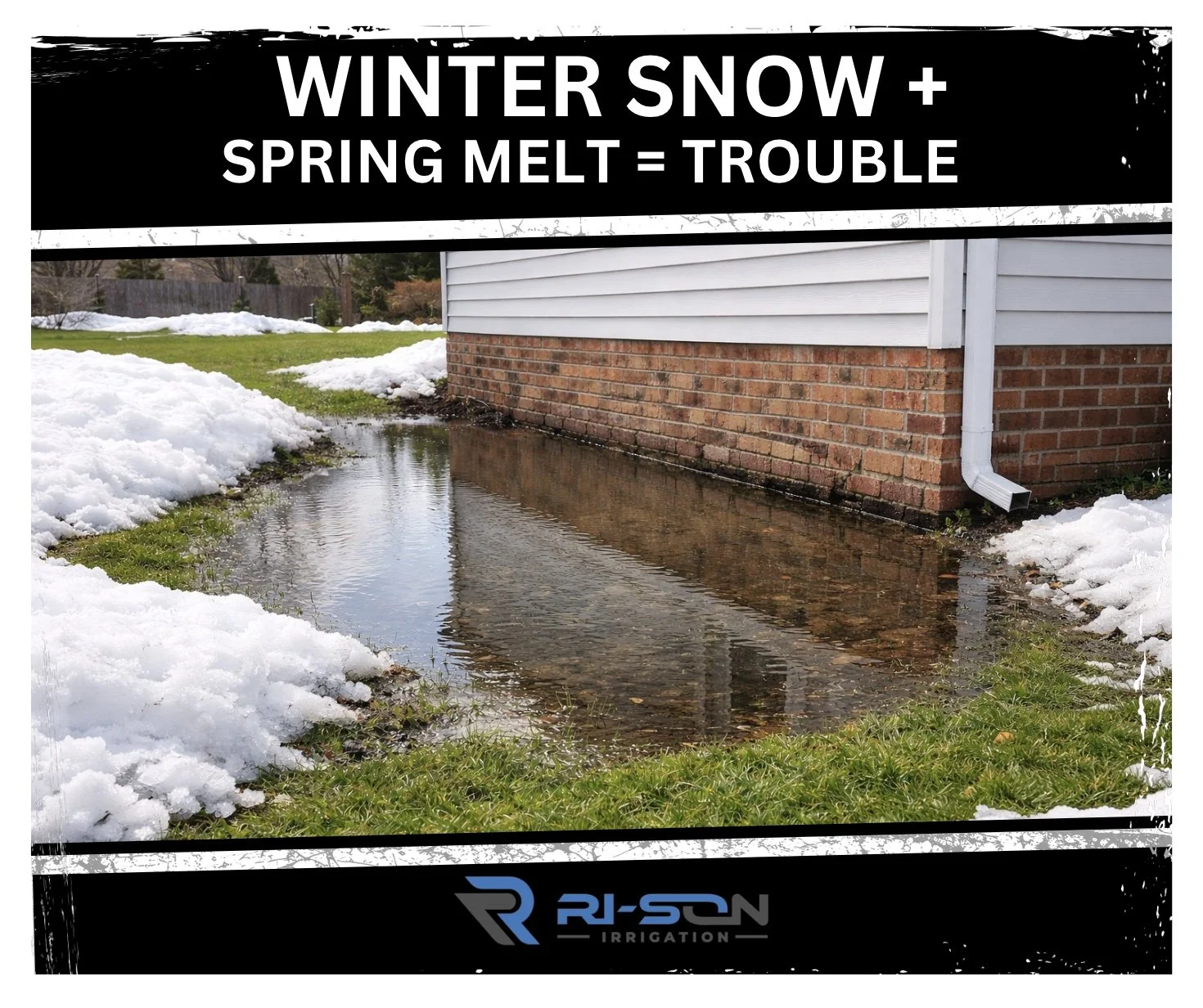
Water around your home isn’t just an inconvenience — it’s a risk. What starts as pooling in the yard or water near the foundation can quietly lead to erosion, foundation cracks, basement leaks, and costly structural repairs. Addressing drainage early prevents small issues from turning into major problems.
At Ri-son Irrigation & Land Services, we assess how water moves across and below your property to determine the right solution. Every property is different — grading, soil type, elevation, and landscaping all affect how water behaves. That’s why drainage is never one-size-fits-all.
Some homes require surface drainage to collect and redirect water before it spreads. Others need subsurface systems to manage water below ground before it builds pressure or causes saturation issues. In many cases, a combination of both provides the best long-term result.
Our goal is simple: design the right system for your property and move water away efficiently.
Our Drainage Solutions
We install proven drainage systems designed to solve specific water issues:
French Drains – Subsurface systems that collect and redirect groundwater away from foundations and low areas.
Downspout Extensions (Buried or Above Ground) – Carry roof runoff safely away from your home.
Dry Wells – Underground systems that collect and disperse excess water into the soil.
Curtain Drains – Intercept groundwater before it reaches problem areas.
Sump Pump Outdoor Discharge Systems – Direct pumped water safely away from your home.
Each system is selected based on your property’s layout and water flow patterns — ensuring a solution that works properly and lasts.
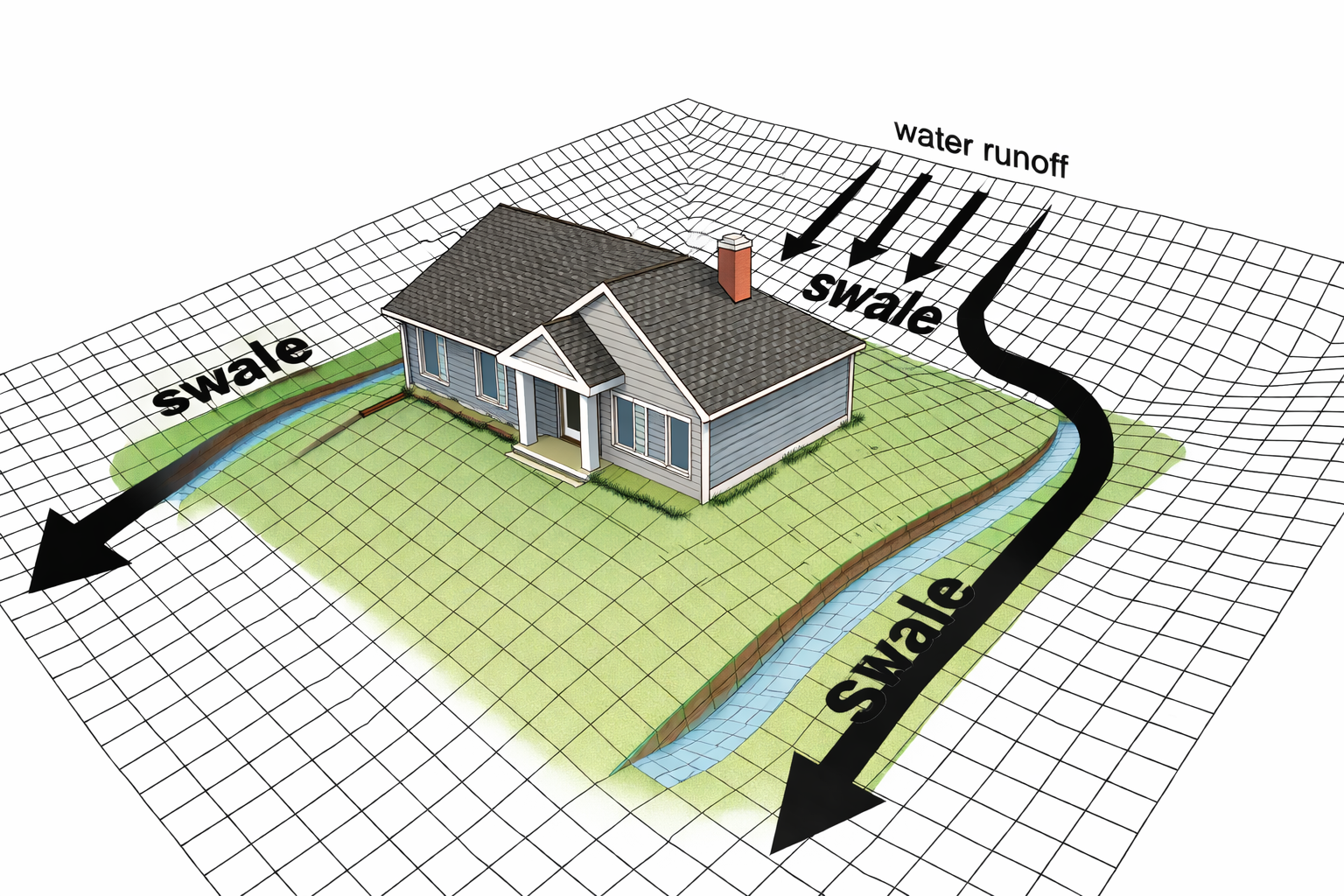
Surface Drainage (Grading / Swale)
What it is:
Surface drainage uses the natural slope of your yard or a shallow, grass-lined channel (called a swale) to guide rainwater safely away from your home.
Why it’s beneficial:
Proper grading prevents standing water, protects your foundation, and reduces erosion — all without visible pipes or major construction. It’s often the first and most important step in solving drainage problems.
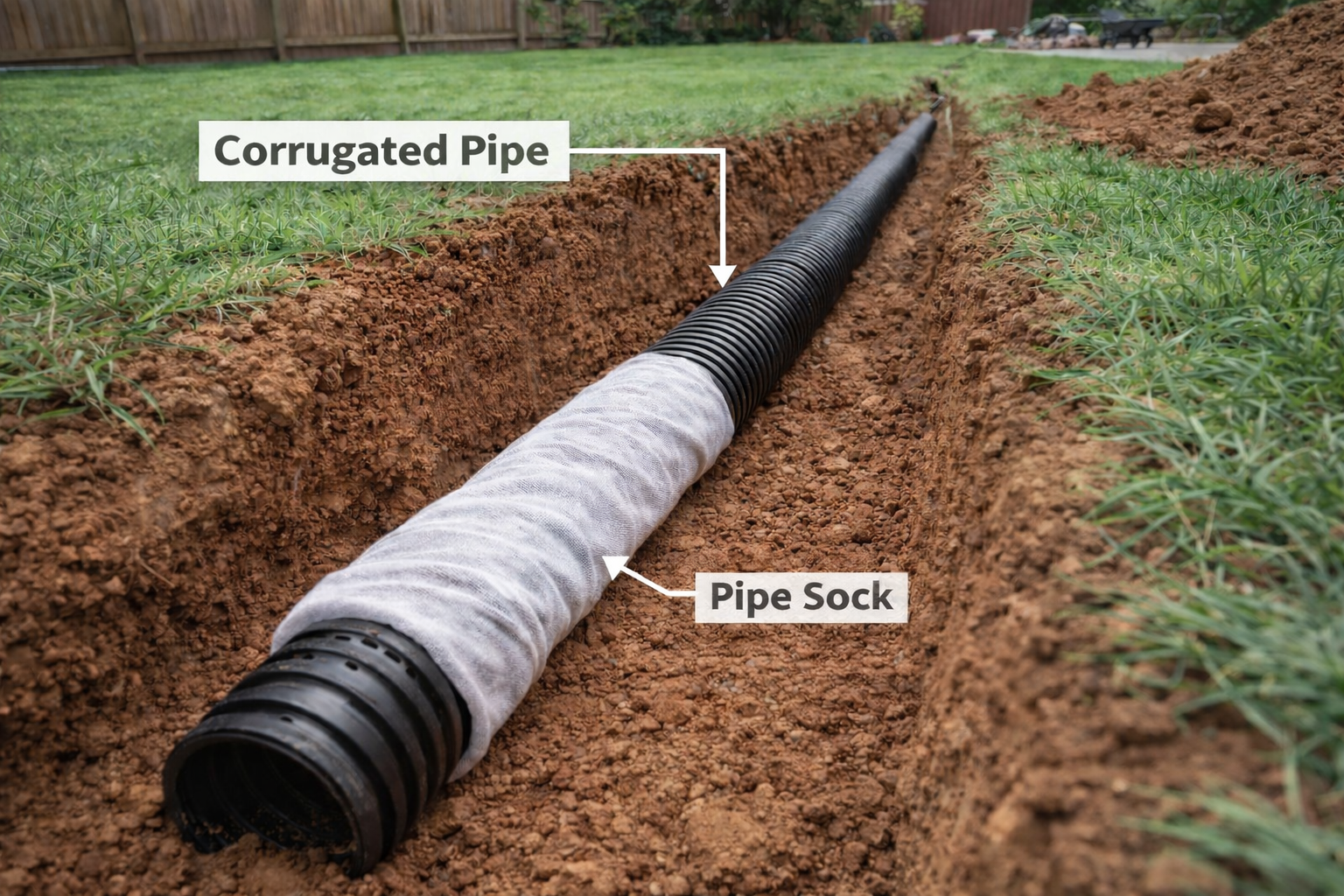
Subsurface Drainage
What it is:
Subsurface drainage is an underground drainage system designed to collect and move excess groundwater away from your yard or foundation. This often includes perforated pipes buried beneath the soil that carry water away before it can surface.
Why it’s beneficial:
Because it works below ground, subsurface drainage eliminates ongoing water issues without changing the look of your yard. It reduces soil saturation, protects your foundation, prevents standing water, and improves the overall health and stability of your landscape.
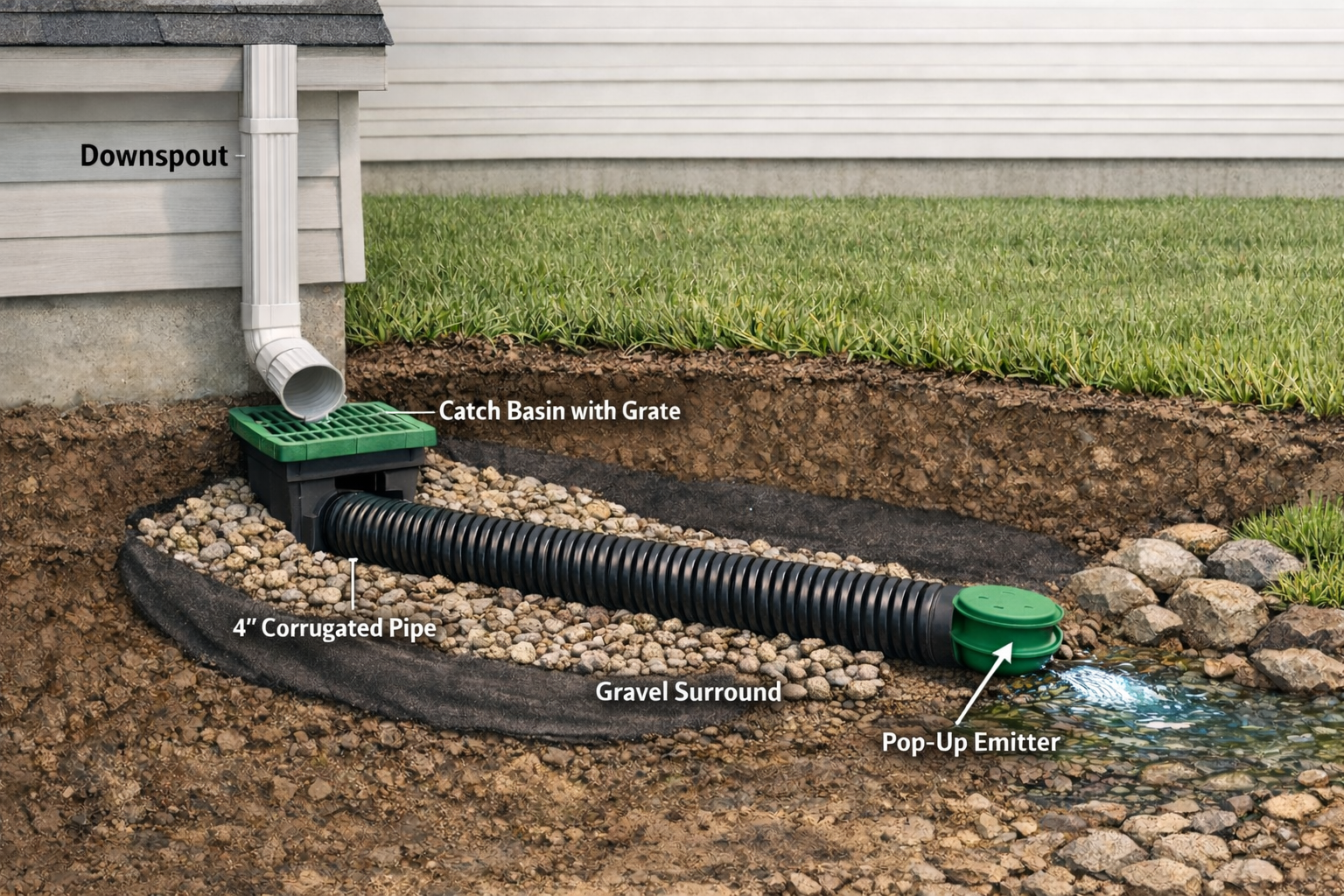
Downspout Drain Extension (Subsurface or Above Ground)
What it is:
An extension connected to your gutter downspout that carries rainwater farther away from your home.
Why it’s beneficial:
Prevents foundation damage, basement leaks, and soil erosion caused by roof runoff. It’s one of the simplest and most cost-effective ways to protect your home.
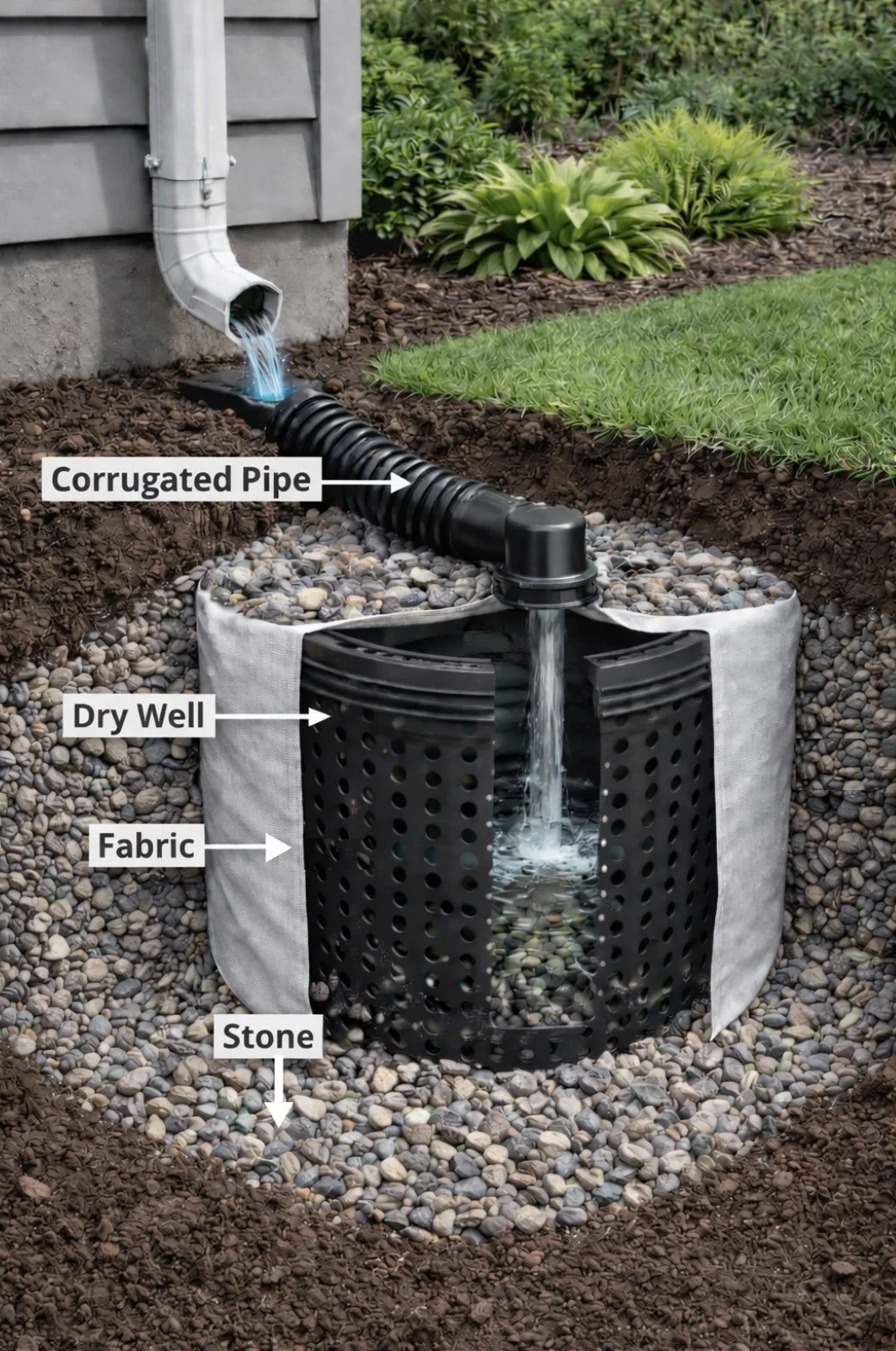
Dry Well
What it is:
An underground gravel-filled pit that collects water and allows it to slowly absorb into the surrounding soil.
Why it’s beneficial:
Manages heavy rainwater runoff, reduces flooding risk, and helps recharge groundwater naturally without overwhelming your yard.
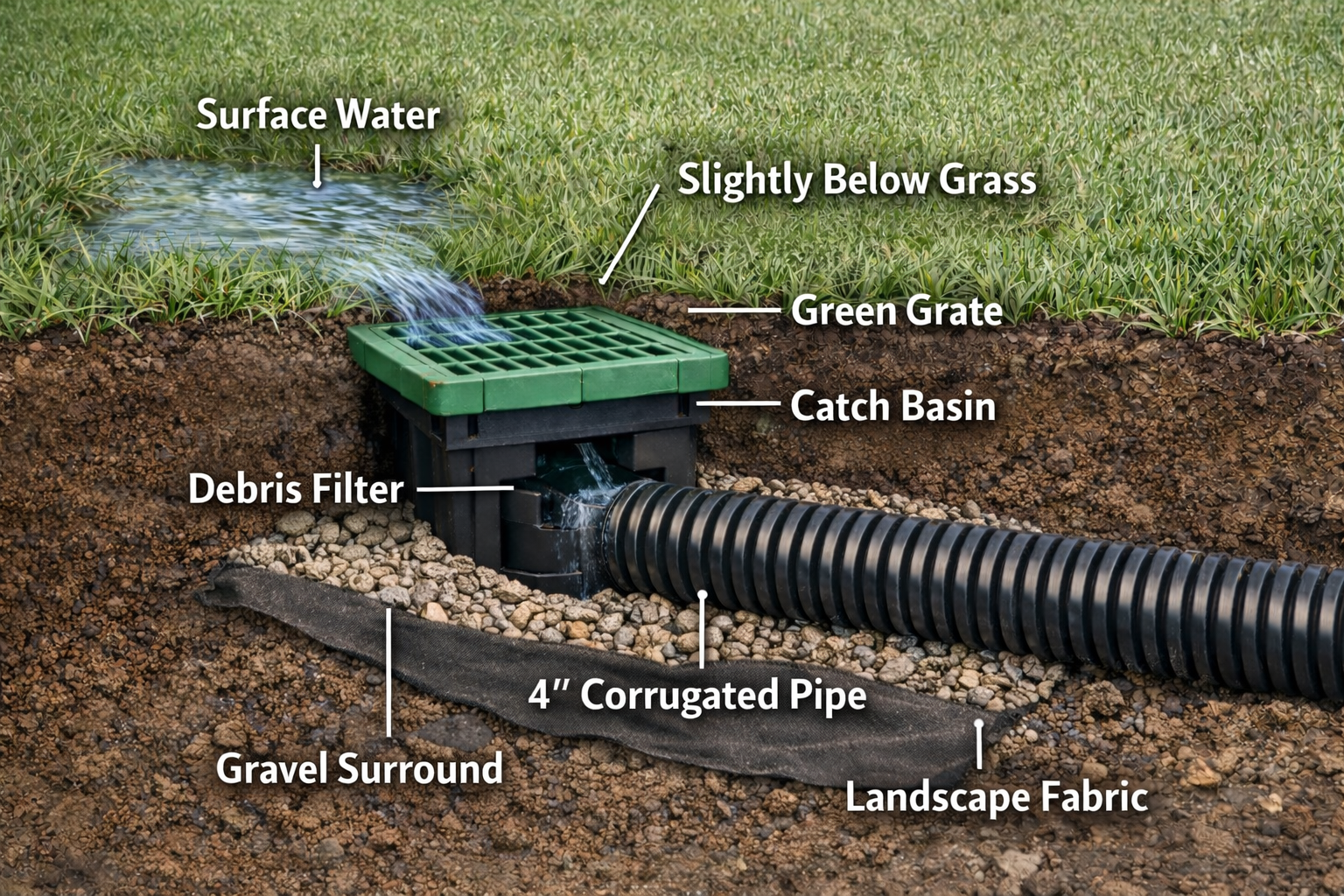
Catch Basin
What it is:
A ground-level box with a grate on top that collects surface water and directs it into underground drainage pipes.
Why it’s beneficial:
Ideal for low spots in your yard where water naturally gathers. It quickly removes standing water and helps prevent lawn damage and soil erosion.
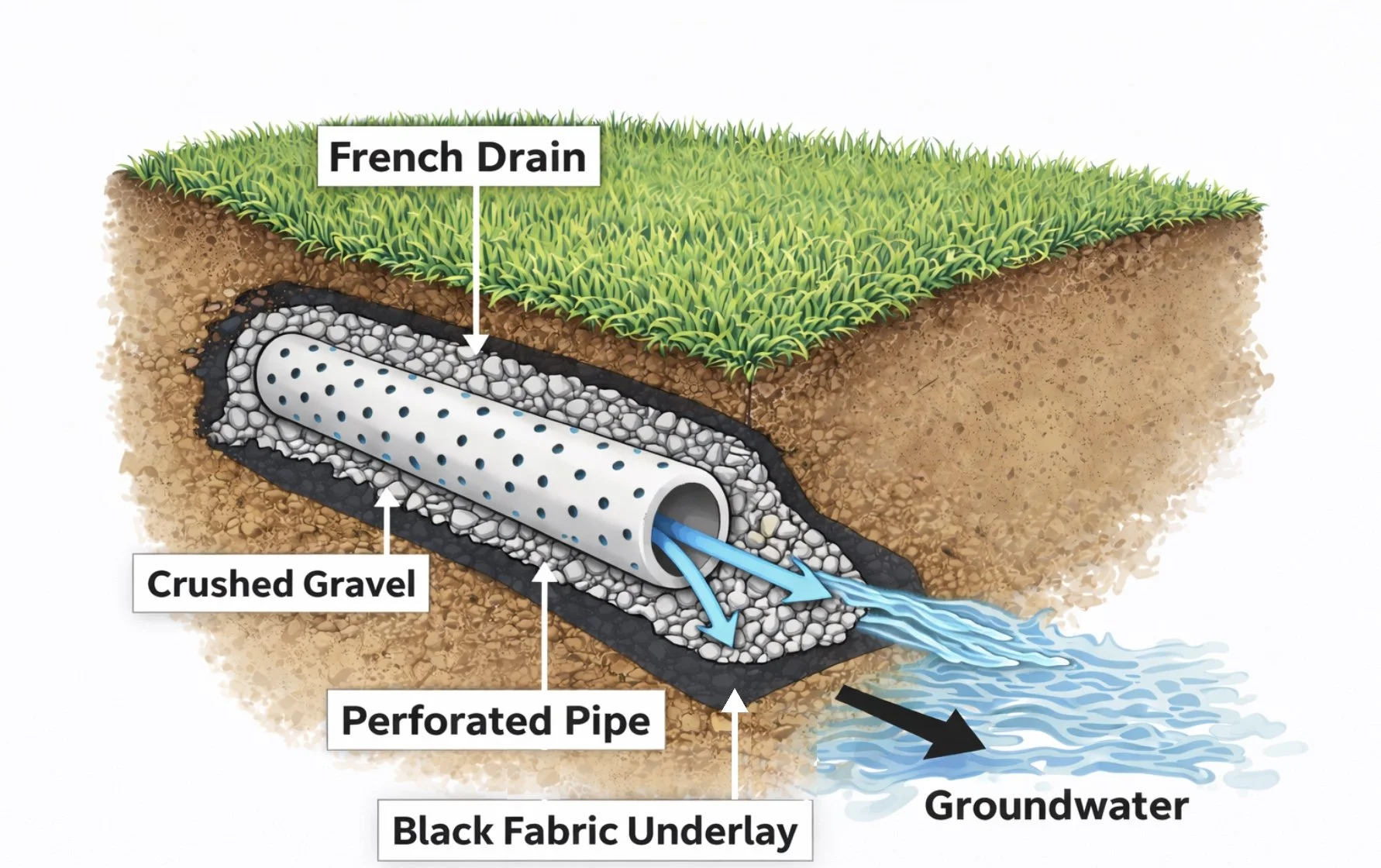
French Drain
What it is:
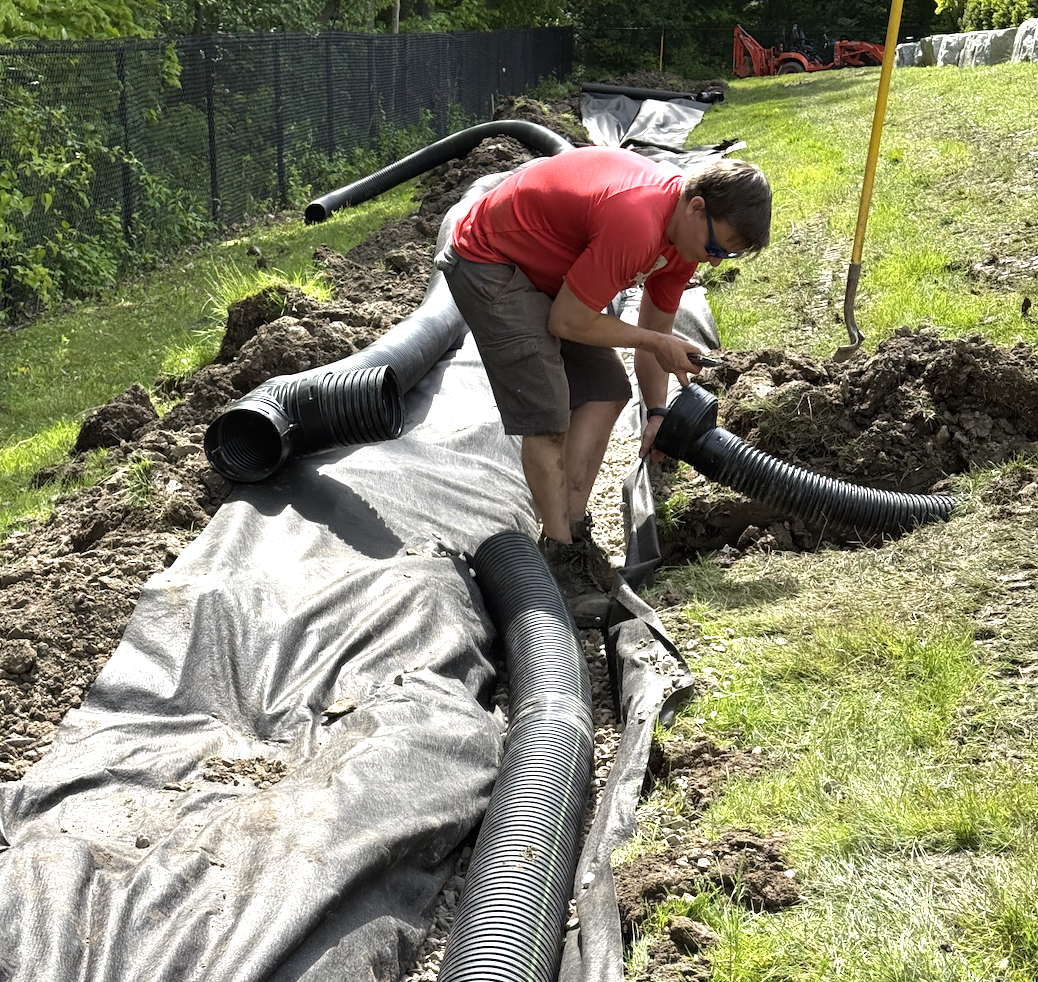
A French drain is a gravel-filled trench with a perforated pipe underneath that collects and redirects groundwater away from problem areas.
Why it’s beneficial:
It eliminates soggy lawns, prevents water from pooling near your foundation, and protects basements from moisture damage — all while staying hidden underground.
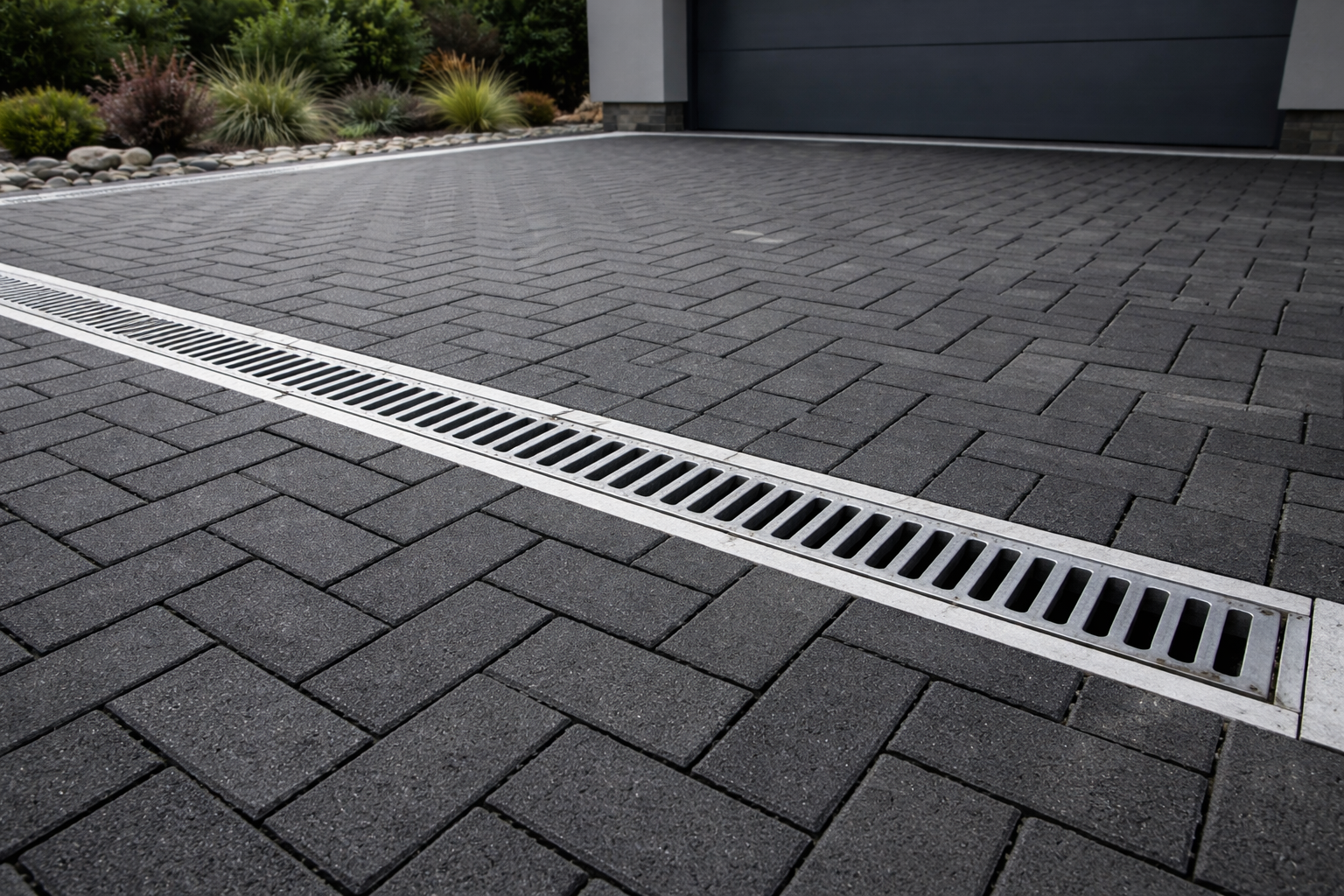
Channel Drain (Trench Drain)
What it is:
A long, narrow drain installed in driveways, patios, or garage entrances that captures surface water before it can pool or flow where it shouldn’t.
Why it’s beneficial:
Prevents flooding in driveways and garages, reduces slip hazards, and protects concrete from long-term water damage.
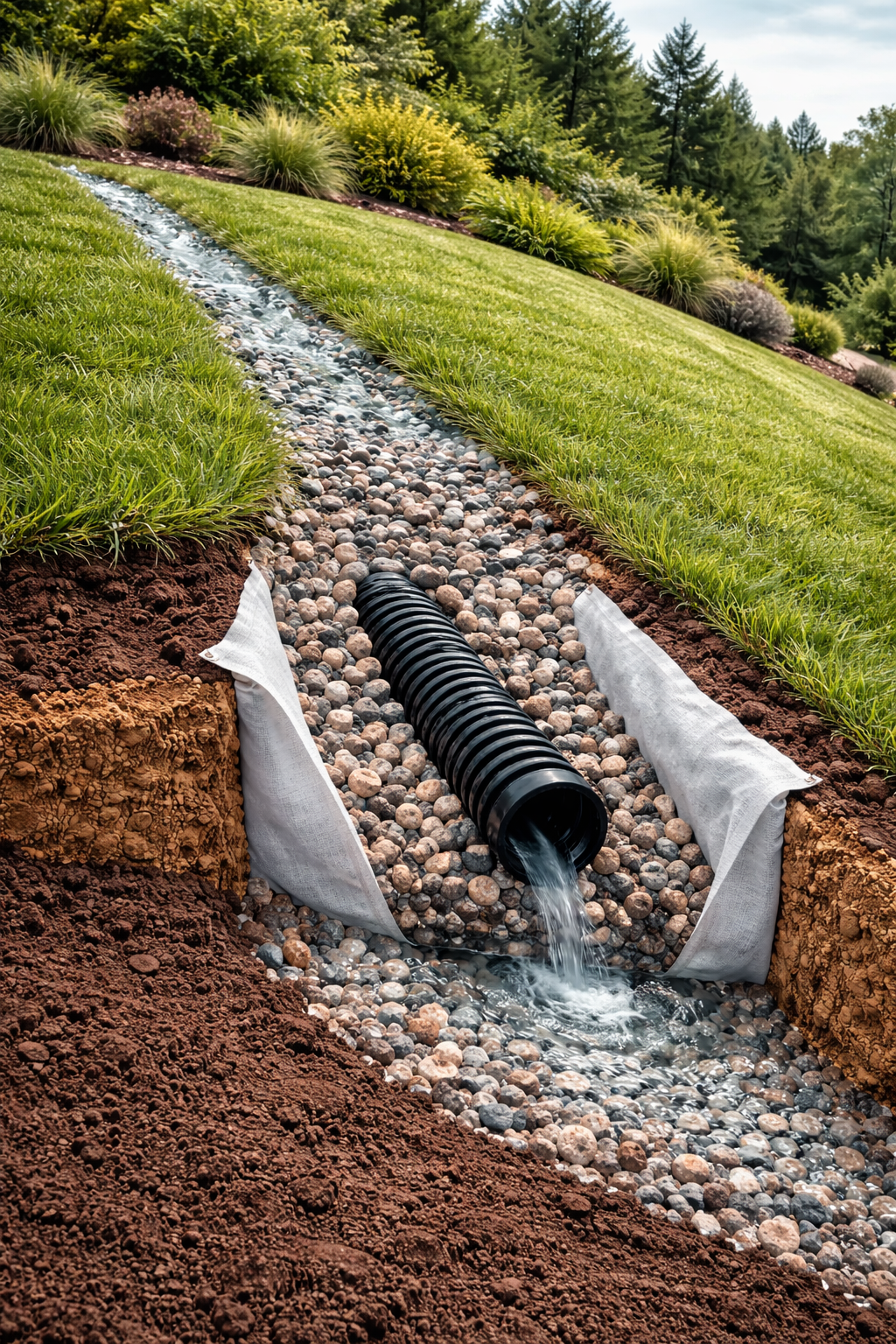
Curtain Drains
What it is:
A curtain drain is a type of French drain installed higher up on a slope to intercept water before it reaches your home. It consists of a gravel-filled trench with a perforated pipe that redirects groundwater safely away from the property.
Why it’s beneficial:
Curtain drains stop water at the source. Instead of waiting for water to reach your foundation, this system captures it early and diverts it away — helping prevent basement leaks, foundation damage, and soggy yard conditions. It’s especially effective for homes built on hills or properties where water flows downhill toward the house.
If you're dealing with:
💧 Standing water in lawn → French drain or regrading
🏠 Water near foundation → downspout extensions + French drain
🚗 Driveway flooding → channel drain
🌧️ Heavy runoff from roof → dry well or buried drain line
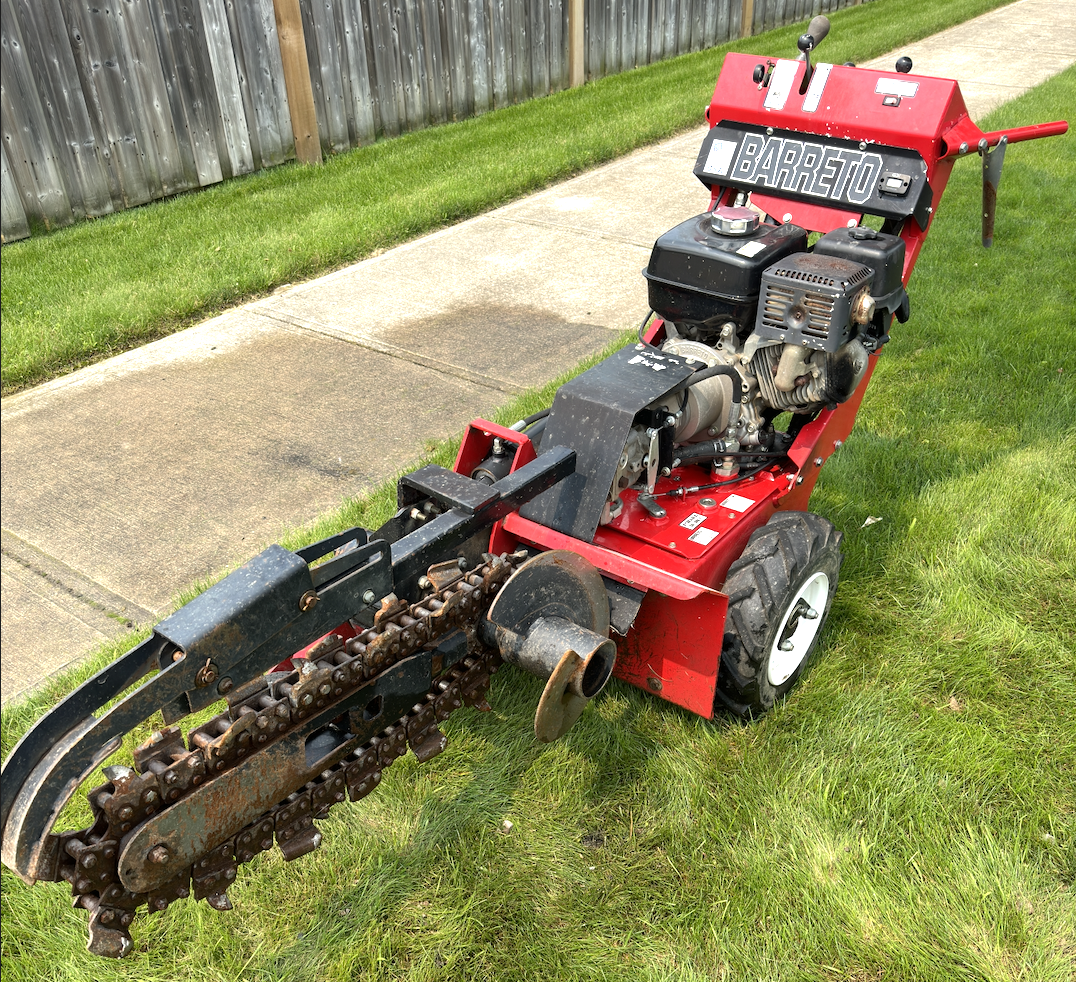
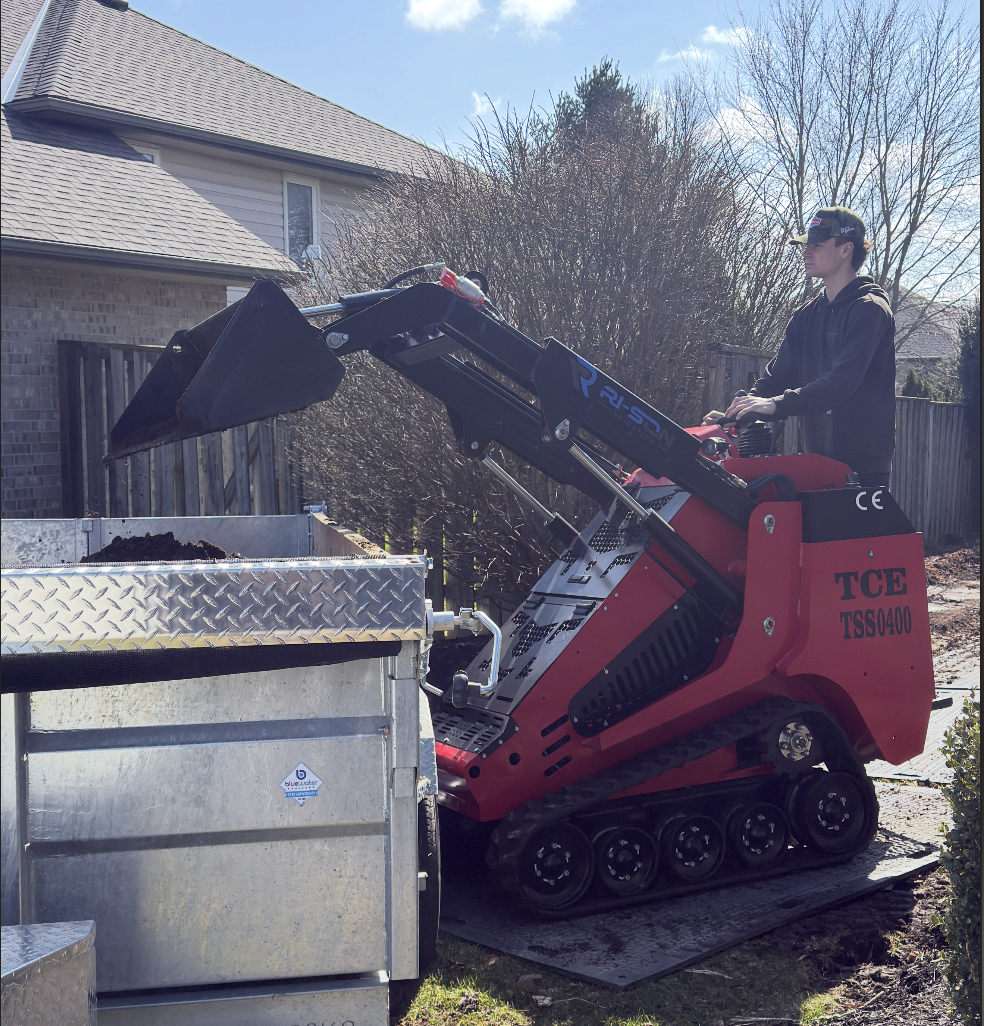
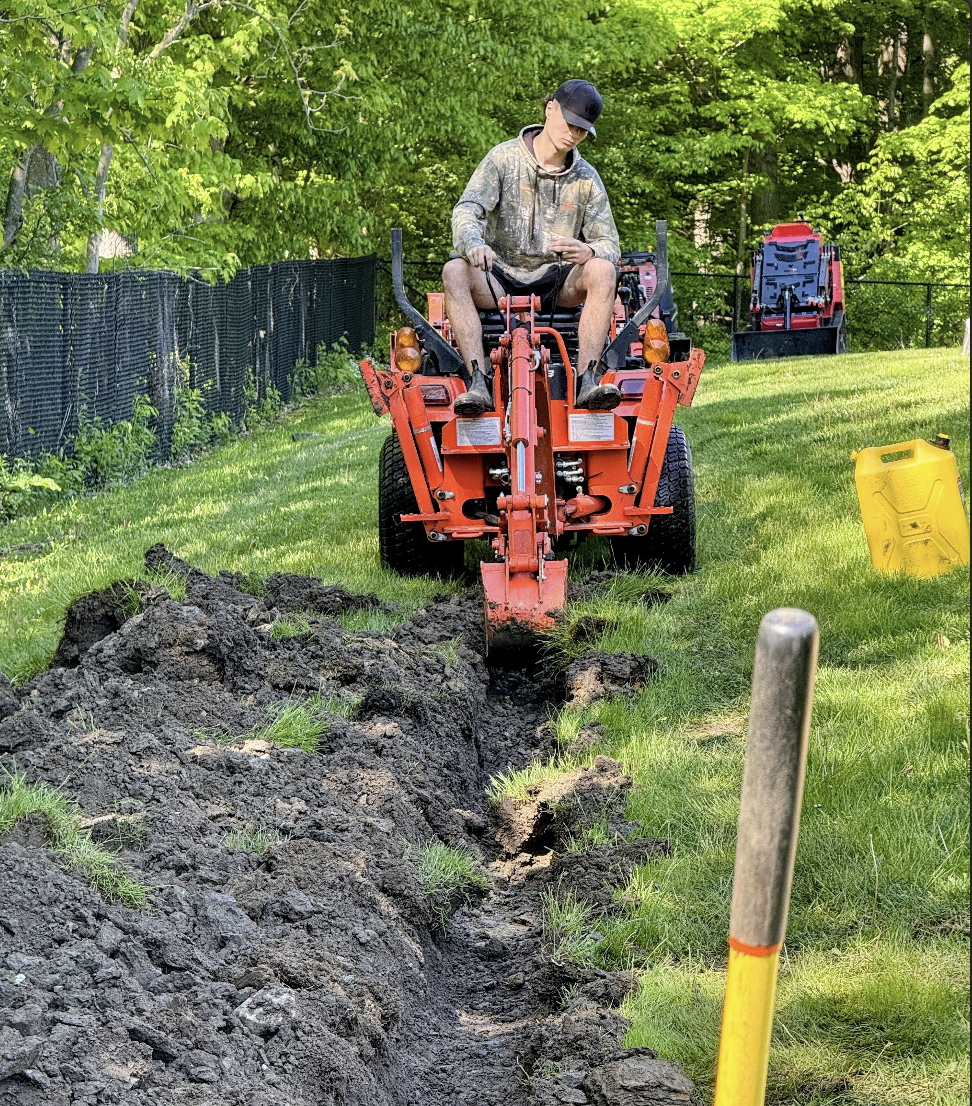
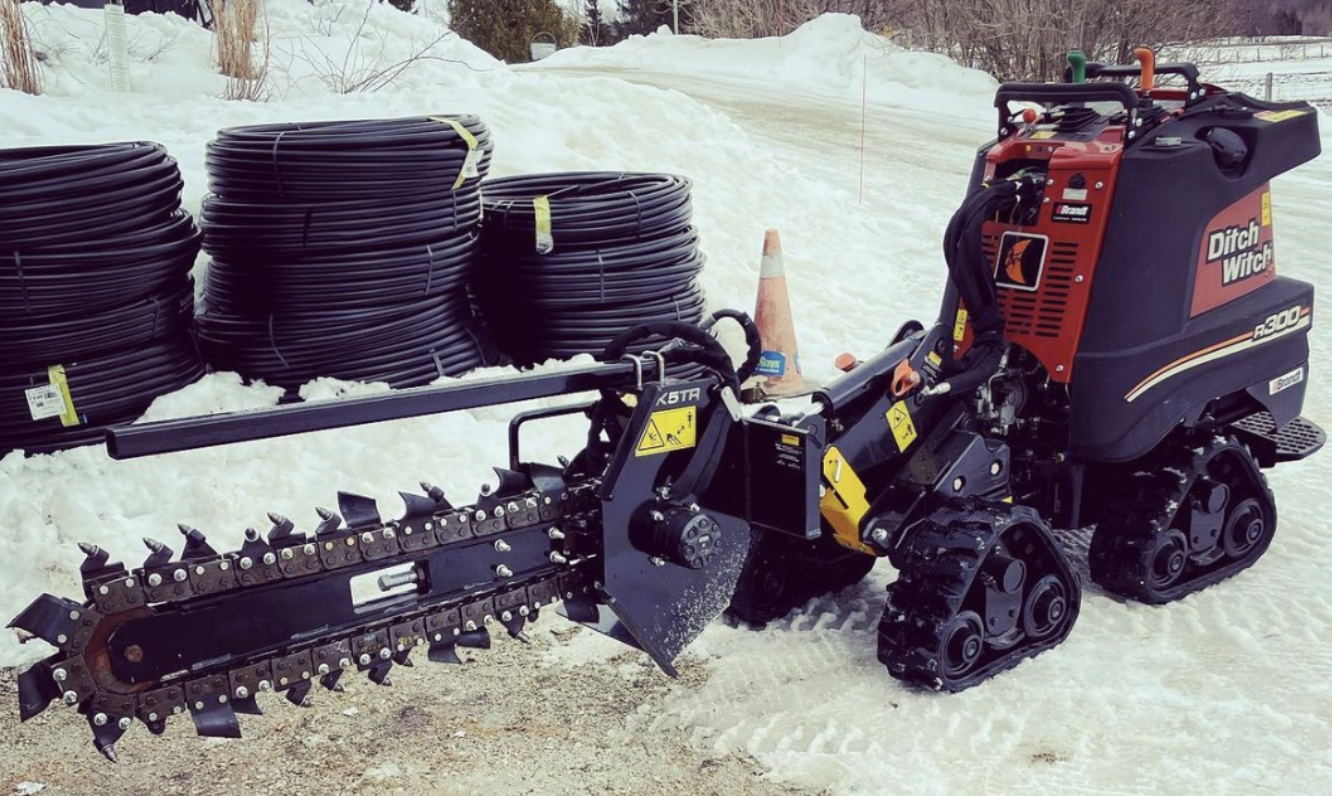
When installing drainage, having the right equipment and parts is
crucial to ensure the job is completed both correctly and safely.